Restaurant and Food-Social Media-03-22: A Toolkit for Digital Appetites
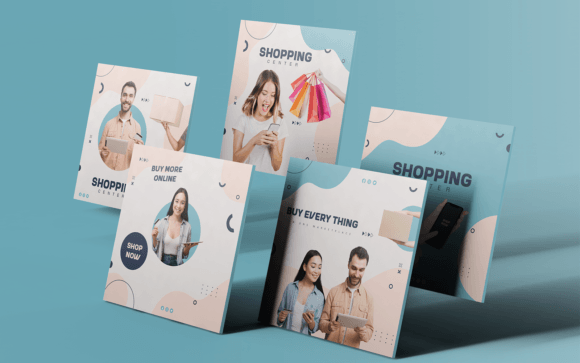
In the crowded landscape of digital marketing, visual consistency is the currency of trust. Whether you are a seasoned designer managing a rebrand or a small business owner launching a new product line, the gap between a professional concept and a pixel-perfect execution often comes down to your design assets. This is where templates like the Restaurant and Food-Social Media-03-22 kit enter the conversation. It is not merely a collection of static images; it is a structured framework designed to streamline the creation of high-impact social media graphics.
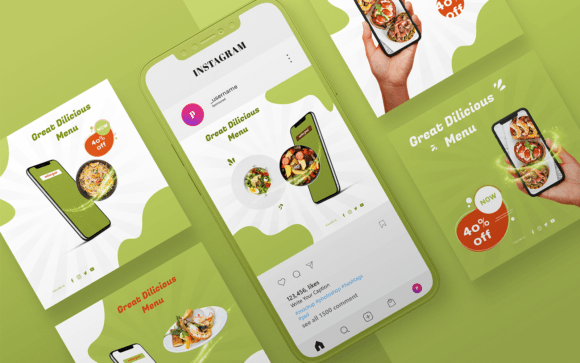
At its core, this kit functions as a bridge between raw creativity and platform requirements. We all know the frustration of designing a beautiful banner only to have it cropped awkwardly by an algorithm or compressed into a low-resolution blur. The Restaurant and Food-Social Media-03-22 set eliminates that guesswork by providing standard dimensions that meet the varying size requirements of different platforms. However, its utility extends far beyond the restaurant industry. While the name suggests a niche application, the underlying structure—layered, organized, and highly editable—makes it a versatile asset for ecommerce, fashion, and general marketing campaigns.
Visual Style and Flexibility
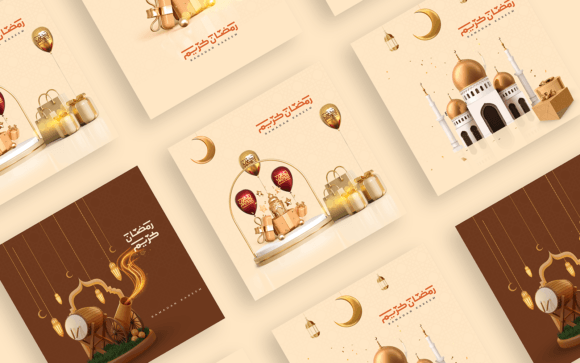
The visual personality of the Restaurant and Food-Social Media-03-22 kit is defined by its adaptability. It is built as a "Ready to Use" foundation, meaning the aesthetic is clean enough to serve as a backdrop for your own content, yet structured enough to guide the viewer’s eye. The files are fully layered, which is a critical feature for anyone serious about modern typography and layout. When you open the PSD or Ai files, you aren't met with a flattened image; you are met with organized groups of elements that can be individually manipulated.
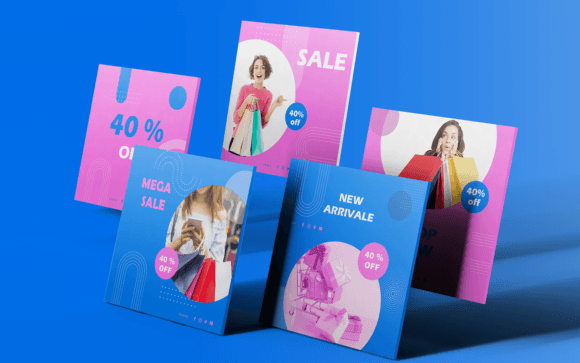
This level of organization allows for rapid changes to the color palette and shape geometry. If you are working on a high-end brand identity for a luxury boutique, you can strip away the heavy graphics and rely on negative space and elegant type placement. Conversely, if you are promoting a flash sale for a busy retail store, you can utilize the template's structural hierarchy to bolden your call-to-action and increase visual contrast. The kit supports this range because it is designed to be "editable by Ai, XD, Photoshop, Canva," meeting the user in their preferred ecosystem rather than forcing them into a new workflow.
Strategic Applications for Branding and Marketing
For the entrepreneur or small business owner, the true value of a social media kit lies in brand consistency. One of the most common pitfalls in digital marketing is disjointed visual language—where an Instagram story looks different from a Facebook cover, which in turn looks different from a website banner. This fragmentation confuses your audience and dilutes brand recognition. By using the Restaurant and Food-Social Media-03-22 templates, you ensure that your typography, spacing, and layout remain uniform across all touchpoints.
Consider the practical application in editorial design or packaging design. A food blogger might use these templates to announce a new recipe series, ensuring the visual weight of the text matches the photography. A marketing team for a startup might use the same file set to create a cohesive campaign for a product launch, utilizing the layered structure to A/B test different headlines. The ability to change text and colors easily means you can create multiple variations of an ad without starting from scratch, saving hours of production time.
Practical Workflow and Typography Integration
When integrating a template like this into your workflow, the focus shifts from layout construction to font pairing and content refinement. The kit is designed to accommodate various typeface styles, but the choice of font remains paramount to your message. Because the files support easy text editing, you have the freedom to experiment with different premium fonts to see what resonates with your specific audience.
For example, if your brand voice is approachable and artisanal, you might pair the template’s structure with a handwritten font or a script font for accents, while using a clean sans serif font for the body text to ensure readability. If your brand is more corporate or authoritative, a sturdy serif font might be appropriate. The key is to ensure that the visual hierarchy is clear. The viewer should immediately understand what is the headline, what is the offer, and what is the call to action. High-resolution support ensures that these typographic details remain crisp, even on high-density mobile screens.
Optimizing for Engagement and Usability
Ultimately, a social media banner is a tool for engagement. The Restaurant and Food-Social Media-03-22 kit facilitates this by providing a clean canvas that supports "easy image placement." This feature is vital for web design and digital advertising, where the interplay between text and imagery determines the click-through rate. A cluttered design drives users away, but a well-organized layout—like the one provided in these templates—keeps the user focused on the value proposition.
For designers and content creators, this asset represents a significant reduction in administrative workload. Instead of worrying about pixel dimensions and layer management, you can focus on the creative strategy: choosing the right imagery, refining the copy, and ensuring the commercial font licensing is in order for the final output. Whether you are building a portfolio, managing client accounts, or running your own ecommerce store, having a reliable set of templates allows you to maintain a high standard of output consistently. It is a practical investment in efficiency, allowing you to deploy professional-grade visuals with the speed that today's digital market demands.